

4 12, 2025

Synovial Fluid and Serum microRNA Signatures in Equine Osteoarthritis

2025-12-04T11:05:09+01:00December 4th, 2025|biomarker, Illumina NewSeq2000, microRNA, microRNA services, miND, miND spike ins, miND spike-in, NGS, Osteoarthritis, quality, Synovial fluid|0 Comments

New research highlights the potential of circulating miRNAs as biomarkers for joint degeneration A new peer-reviewed study has been published in the International Journal of Molecular Sciences (IJMS): “Synovial Fluid and Serum MicroRNA Signatures in Equine Osteoarthritis.” This work provides important insights into how microRNAs (miRNAs) in serum and synovial fluid reflect the presence of osteoarthritis (OA) in horses. 🎯 Study Aim The researchers sought to identify disease-associated miRNAs that differ between healthy horses and horses with osteoarthritis. Their goal was to uncover molecular signatures that could support the development of novel biomarkers for early detection and monitoring of OA. 🔬 Methods Serum and synovial fluid samples were collected from healthy controls (n = 4) and horses [...]


26 11, 2025

TAmiRNA and Orthopaedic Hospital Speising Publish Landmark Data on promiR® for Accurate Diagnosis of Periprosthetic Joint Infections

2025-12-04T11:05:55+01:00November 26th, 2025|biomarkers in orthopaedics, Illumina NewSeq2000, microRNA, microRNA services, miND, miND spike ins, miND spike-in, NGS, periprosthetic joint infections, promiR, quality, Synovial fluid|Comments Off on TAmiRNA and Orthopaedic Hospital Speising Publish Landmark Data on promiR® for Accurate Diagnosis of Periprosthetic Joint Infections

On November 19th, 2025, the study “Synovial Fluid MicroRNA Biomarkers Enable Accurate Diagnosis of Hip and Knee Periprosthetic Joint Infections” by Frank et al. was published in the Journal of Bone and Joint Surgery. This peer-reviewed publication marks an important milestone in TAmiRNA’s biomarker development program and presents promiR®, our novel microRNA-based diagnostic panel designed to improve the pre-operative assessment of periprosthetic joint infections (PJIs). Clinical Challenge PJIs remain one of the most serious and difficult complications following total joint replacement. Current diagnostic methods—including inflammatory markers, imaging, and cultures—often lack sensitivity and specificity, especially for low-grade or culture-negative infections. Even advanced approaches such as PCR or next-generation sequencing can suffer from contamination risks and ambiguous [...]

11 11, 2025

Distinct microRNA profiles in human amniotic membrane its vesicular and non-vesicular secretome revealed

2025-11-11T08:44:13+01:00November 11th, 2025|exosomes, extracellular vesicle, Illumina NewSeq2000, microRNA, microRNA services, miND, miND spike ins, miND spike-in, NGS, quality|Comments Off on Distinct microRNA profiles in human amniotic membrane its vesicular and non-vesicular secretome revealed

Vienna, Austria – November 2025 TAmiRNA scientist have contributed significantly to a new study published by the Ludwig Boltzmann Institute for Traumatology, which is titled “Distinct miRNA profiles in human amniotic tissue and its vesicular and non-vesicular secretome”. The article was published in Frontiers in Cell and Developmental Biology on October 29th 2025. Human amniotic membrane (hAM) has been used in tissue regeneration and wound healing applications. In this study, the miND® small RNA-sequencing workflow was applied to generate fresh insights into the microRNA composition of two spatially and physiologically distinct regions of the human amniotic membrane (hAM) and its secreted extracellular vesicles (EVs) and protein-bound miRNAs. The work highlights how advanced analytical workflows can uncover tissue- [...]

9 01, 2025

TAmiRNA ‘2024 In Review’

2025-01-09T14:05:02+01:00January 9th, 2025|biomarker, Biomarker Discovery, biomarkers, CE-IVD, congress, EVscale, exosomes, extracellular vesicle, hepatomiR kit, Illumina NewSeq2000, ISO 13485, liquid biopsies, Liver disease, microRNA, microRNA services, microRNAs, NGS, PCR testing service, quality, sequencing, small RNA-sequencing, smallRNA, test service|Comments Off on TAmiRNA ‘2024 In Review’

2024: A Year of Growth, Innovation, and Collaboration 2024 has come to a close. We are proud to reflect on the milestones and achievements we’ve reached together with our incredible team, customers, partners, and supporters. Here’s a look back at what we accomplished this year: 👩‍🔬 Team Expansion Welcomed 3 talented new members to our growing team. 🏥 Diagnostic Implementation Successfully rolled out our CE-IVD microRNA liver function test in 5+ clinics, advancing molecular diagnostics. ✅ Service Excellence Completed over 80 RNA service projects, achieving 100% customer satisfaction. 🛠 Bioinformatics Innovation Developed 2 new pipelines: isomiR analysis and tRNA analysis, enhancing our capabilities. 🧬 Expanded Service Offerings Added whole-transcriptome sequencing for mRNA, lncRNA, and circRNA in liquid biopsies to our service portfolio. [...]

15 10, 2024

Eager to lern more about differential miRNA expression patterns in Type 2 diabetes mellitus

2024-10-15T07:46:12+02:00October 15th, 2024|biomarker, bone diseases, bone fracture risk assessment, diabetes, microRNA services, microRNAs, miND spike ins, NGS, sequencing, smallRNA|Comments Off on Eager to lern more about differential miRNA expression patterns in Type 2 diabetes mellitus

Excited to share our latest study on the link between Type 2 Diabetes Mellitus (T2DM) and bone fragility using miRNA profiling in a polygenic mouse model! 🧬🦴 🔍 Research Highlights: We utilized an unbiased genome-wide approach to identify dysregulated miRNAs in serum, bone marrow, and bone of the TallyHo/JngJ (TH) mouse model, which closely mirrors T2DM in humans. Key findings include upregulation of miRNAs such as mmu-miR-466i-5p and mmu-miR-1195 in both serum and bone marrow of diabetic mice. Dysregulated miRNAs were linked to pathways associated with diabetes-related signaling and diabetic bone disease, shedding light on potential mechanistic pathways. Cell-type enrichment analysis pointed towards miRNAs enriched in specific cell types like immune cells, hepatocytes, and mesenchymal stem cells, [...]

18 09, 2024

Eager to lern more about neuron-derived extracellular vesicles as predictive biomarkers

2024-09-18T14:10:09+02:00September 18th, 2024|biomarker, biomarkers, exosomes, microRNA services, microRNAs, miND spike ins, NGS, sequencing, smallRNA|Comments Off on Eager to lern more about neuron-derived extracellular vesicles as predictive biomarkers

A new study from the University of Trieste explores the potential of microRNA (miRNA) profiles in neuron-derived extracellular vesicles (NDEVs) as predictive biomarkers for adverse drug reactions (ADRs) in children receiving ketamine. This research, leveraging TAmiRNA's Next-Generation Sequencing (NGS)-based miND® pipeline, identified specific miRNAs (miR-18a-3p, miR-484, and miR-548az-5p) as potential tools to predict ketamine-induced ADRs. This breakthrough not only advances our understanding of ketamine's side effects in children but also demonstrates the biomarker potential of organ-specific EVs and their miRNA cargo. Interested in our of extracellular vesicles (EVs) and exosomes services - click here! click here to read the paper

9 08, 2024

Eager to lern more about Early Detection of Colorectal Cancer through MicroRNA Profiling

2024-08-09T11:17:20+02:00August 9th, 2024|biomarker, biomarkers, exosomes, microRNA services, microRNAs, miND spike ins, NGS, sequencing, smallRNA|Comments Off on Eager to lern more about Early Detection of Colorectal Cancer through MicroRNA Profiling

TAmiRNA and its partner Biomedica are proud to announce that researchers from the Jagiellonian University Medical College used our innovative small RNA-sequencing pipeline (miND®) to unravel novel miRNA expression profiles in colorectal cancer cell lines and the extracellular vesicles (EVs) they produce. Colorectal cancer ranks as the third most common cancer in men and the second in women globally. Late diagnosis significantly contributes to rising morbidity and mortality rates, emphasizing the urgent need for new markers for early and precise detection. The analysis of miRNAs in plasma-derived EVs and tumor samples from CRC patients revealed a similar miRNA expression profile between patient samples and CRC cell lines. Importantly, miR-182-5p, miR-196b-5p, miR-425-5p, and miR-429 were found regulated in [...]

10 04, 2024

Eager to lern more about Sepsis-associated acute kidney injury?

2024-04-10T13:16:00+02:00April 10th, 2024|biomarker, biomarkers, microRNA services, microRNAs, microstructure, miND spike ins, NGS, sequencing, smallRNA, Vivomicx|Comments Off on Eager to lern more about Sepsis-associated acute kidney injury?

We are pleased to share our latest publication, a collaborative effort with TAmiRNA, titled 'Sepsis-Induced Heterogeneous Transcription of Coagulation- and Inflammation-Associated Genes in Renal Microvasculature,' which has been published in Thrombosis Research. Through the integration of TAmiRNA's high-sensitivity gene expression profiling techniques (RT-qPCR and smallRNAseq/RNAseq) and the advanced laser microdissection technology from Dutch company Vivomicx, our study unveils the diverse transcriptional responses of microvascular compartments to sepsis-associated acute kidney injury (SA-AKI). Our findings demonstrate that distinct changes occur in the expression of coagulation- and inflammation-related genes across microvascular compartments in response to SA-AKI. This heterogeneity underscores the complexity of the microvascular response to sepsis and highlights potential avenues for targeted therapeutic intervention. Moving forward, our research will [...]

26 01, 2024

TAmiRNA ‘2023 In Review’

2024-01-26T11:44:38+01:00January 26th, 2024|biomarker, biomarkers, exosomes, extracellular vesicle, ISO 13485, Liver disease, microRNA, microRNA services, microRNAs, quality, sequencing, smallRNA|Comments Off on TAmiRNA ‘2023 In Review’

One last look back at 2023 before we turn our attention to our goals for 2024: last year brought us progress in many areas, from the development of new laboratory and data analyses to the implementation of hepatomiR® in routine clinical diagnostics and the establishment of important partnerships. Our thanks go to the entire (growing) TAmiRNA team, and our customers and partners! We look forward to working together and to our joint successes in 2024!

17 01, 2024

Analysis of extracellular vesicle microRNA profiles reveals distinct blood and lymphatic endothelial cell origins

2024-01-17T11:03:50+01:00January 17th, 2024|biomarker, biomarkers, exosomes, extracellular vesicle, microRNA, microRNA services, microRNAs|Comments Off on Analysis of extracellular vesicle microRNA profiles reveals distinct blood and lymphatic endothelial cell origins

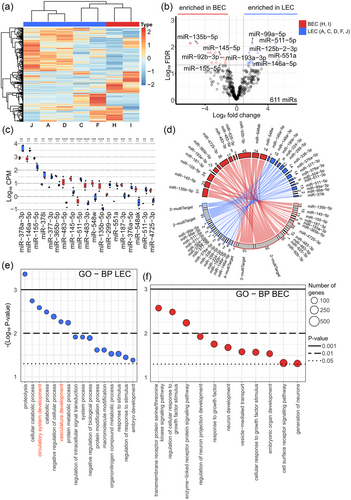
We want to draw your attention to the latest collaborative publication by TAmiRNA scientist Marianne Pultar: “Analysis of extracellular vesicle microRNA profiles reveals distinct blood and lymphatic endothelial cell origins” published in the Journal of Extracellular Biology. By applying TAmiRNA´s unique small RNA-seq and RNA-seq workflows, this study provides important insights into the secretory behavior of endothelial cell-derived extracellular vesicles (EVs) and their microRNA cargo. In future, these findings can support the identification and development of non-invasive and cell-type specific biomarkers in liquid biopsis. Click here to learn more about our EV service click here to read the paper

Go to Top